
Cashless Payments at Night Markets: Convenience with New
8 Jan.
Author: ZHANG JINING
Editor: YANG SHIYING
[Photo by ZHANG JINING]
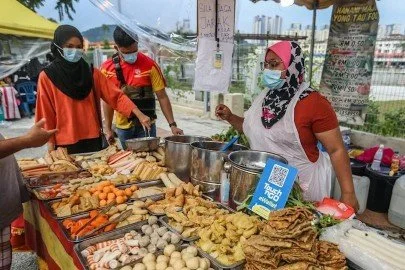
Night markets have always been a symbol of community life in Kuala Lumpur and Selangor. They are places where people gather, eat together, and enjoy a lively atmosphere. In recent years, however, these traditional spaces have been quietly changing. Cashless payment methods such as DuitNow, Touch ‘n Go eWallet and GrabPay are becoming more common, and this shift is reshaping the way people experience night markets.
From a practical point of view, cashless payments bring clear convenience. Customers no longer need to carry large amounts of cash or worry about not having enough small change. A quick scan of a QR code is often faster than counting notes and coins, especially during busy hours. For many young customers, digital payment has already become a daily habit. They expect speed and efficiency, and night market vendors are responding to these expectations.
For vendors, the benefits are also obvious. Digital transactions are automatically recorded, which makes it easier to track daily income and manage sales. This reduces human error and saves time at the end of the day. Some stall operators have said that they feel less stressed when handling payments because they do not need to prepare a lot of small change. In this sense, cashless systems help update small businesses and make daily operations smoother.
In addition to speed, cashless payment also changes how people plan their spending at night markets. When using cash, people are more aware of how much money they have left in their wallet. Once the cash is gone, they usually stop buying. However, when using e-wallets, spending becomes less visible. A few scans can easily add up without people realising it. From my observation, some customers keep buying snacks and drinks simply because payment feels “painless”. This shows that while cashless systems are convenient, they also encourage impulsive consumption. Night markets are already full of food and products, and they become even more attractive when payment is effortless.
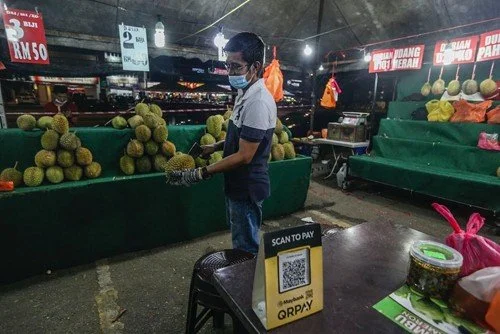
However, the growing use of cashless payments also raises important concerns. Not everyone feels comfortable using e-wallets, especially older customers. Some people still prefer to see and touch physical money, and others may not have smartphones or stable internet access. If night markets move too quickly towards cashless systems, there is a risk that certain groups may feel excluded. Night markets are meant to be open and welcoming to all, not only to the young.
From what I have seen in the Bangi night market, some older customers feel embarrassed when they do not understand how to use QR codes or mobile payments. They may pretend to understand, but actually look confused. In some cases, they ask younger family members to help, while in other cases they quietly leave. Night markets should be spaces where everyone feels relaxed and welcome, not places that make people feel left behind. Technology is supposed to make life easier, but when it is not designed with all groups in mind, it can also create new forms of pressure.
[Photo by ZHANG JINING]
Another issue is the loss of the traditional feeling. For many people, night markets are not just about buying food,they are about the experience. The sound of coins, the exchange of cash, and the simple interaction between buyer and seller are part of the culture. When everything becomes digital, some of this warmth may disappear. While technology brings efficiency, it should not replace human connection.
At the same time, it is clear that the world is moving towards a cashless economy. The Malaysian government has encouraged small businesses to adopt digital payment systems, and this policy direction is unlikely to change. In this context, night markets cannot remain completely traditional. They must adapt in order to survive and stay relevant. The key is balance.
In my view, offering flexible payment options allows vendors to serve a wider range of customers. Young people can enjoy the speed of digital payments, while older visitors can continue using cash. In this way, night markets can develop without losing their inclusive and community-based nature.The problem is how it is used and how fast it replaces traditional practices. Night markets are not only economic spaces,but also cultural spaces. They carry memories, habits, and emotions. When everything becomes digital, something human may be lost. Warmth, interaction, and inclusiveness are also important values. If night markets only focus on speed and convenience, they may lose their original attractiveness.
In conclusion, cashless payments are changing Malaysian night markets. This brings efficiency but also new challenges. If they are handled well, going digital will make the experience better rather than worse. Above all, night markets must remain open and welcoming to everyone, regardless of payment method.